
How to Value a Lakefront Property in Incline Village
How do you value a lakefront property in Incline Village?
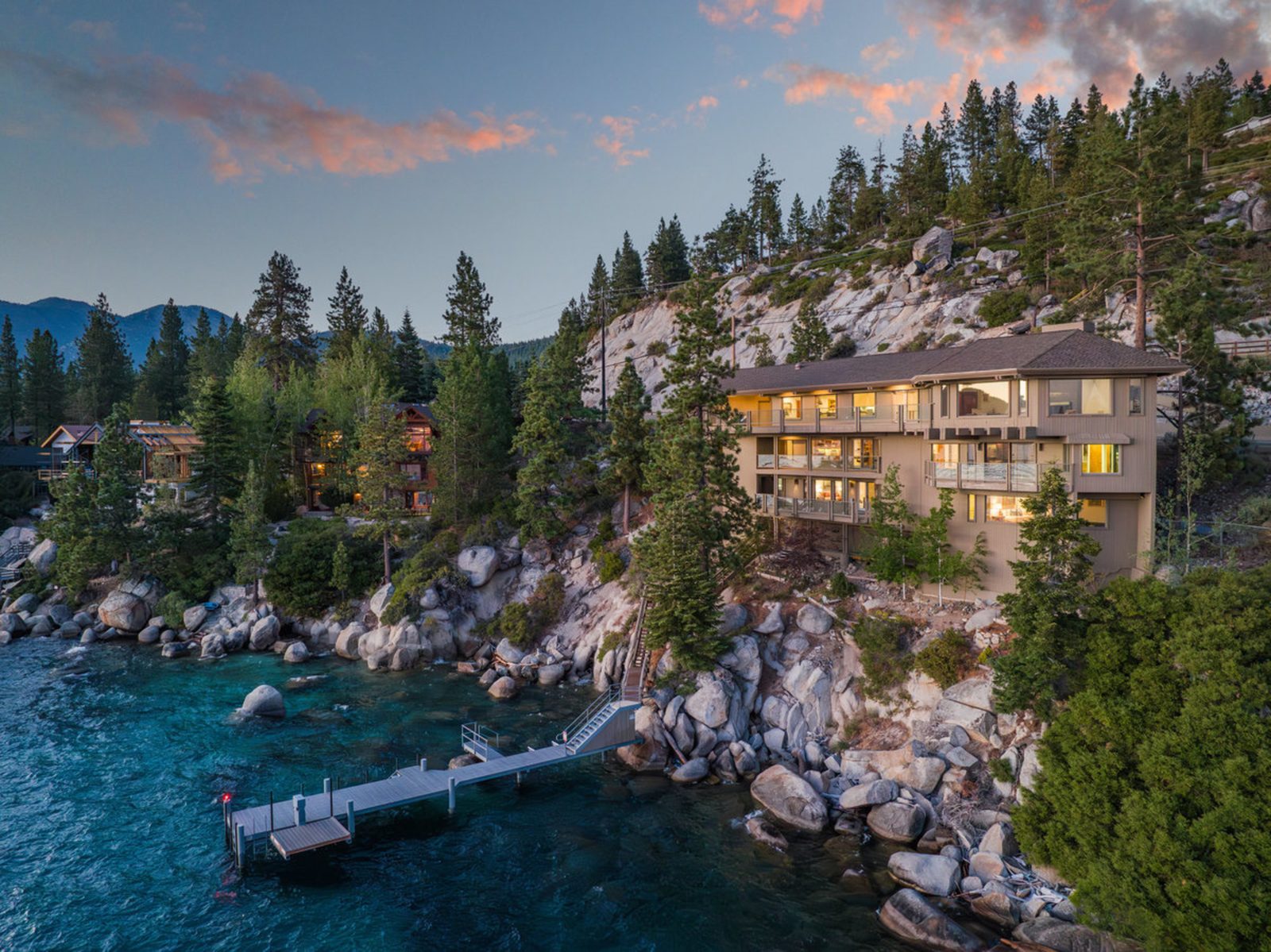
Start with the land. On most Incline Village and Crystal Bay lakefront parcels, value comes from what TRPA will let you build, how much frontage you own, how deep the water is off your shoreline, and whether a pier and buoys are permitted and transfer to you. The house matters too, but how much depends on the property. Some large sales are full remodels or rebuilds, there is brand-new construction in the $25 million range in Crystal Bay, and many buyers of dated but well-kept homes live in them as is.
Key Takeaways
- Start with what can be built. TRPA land coverage, backshore limits, height, and scenic review from the lake set the size of the home a lakefront lot can support.
- Verified existing coverage is one of the most valuable things an older lakefront home carries, because it can often be reused in a rebuild.
- Some high-end lakefront purchases here are land purchases, and price per square foot is a weak measure when the house is likely to be replaced. Others are brand-new homes, or dated homes buyers are happy to live in as is.
- Frontage width, water depth, and the shape of the shoreline decide how usable the water is and where a pier or buoy can go.
- A pier or buoy is only as good as its permit file. Confirm the authorization and that it transfers to you.
When I walk a lakefront property with a buyer, we start with the land: how much of it TRPA lets you cover, how much shoreline comes with it, how deep the water is off the end of a pier, and what’s permitted at the water. The house comes after that.
What does a $13.8 million Crystal Bay sale tell you?
In Q2 2026, a Crystal Bay lakefront home closed at $13.8 million, about $3,272 per square foot. That figure looks enormous next to anything else in town, but price per square foot doesn’t tell you much on a property like this. It’s likely a full scraper. The buyer bought a lakefront parcel, its shoreline, and its water rights, and the house will most likely be replaced.
It’s one of several patterns at the top of the lakefront market. When the land and the shoreline are right, some buyers will pay for them and plan a new home around them. Others are buying brand-new construction, like the homes in the $25 million range in Crystal Bay, or a dated but well-kept home they plan to live in as is. Either way, the questions that matter start with what can be built on the lot and what the water access allows.
What can you build on a lakefront lot in Incline Village?
Lakefront parcels get more TRPA scrutiny than almost any other property in the basin. Before you can value one, you need to know the size and shape of the home it can support.
Land coverage and the backshore
- Allowable coverage. TRPA classifies each parcel by soil and slope, and that classification sets how much of the lot can be covered by roofs, driveways, decks, and patios.
- Backshore. Most lakefront parcels include backshore, the strip of land just inland of the shoreline. Backshore carries very low allowable coverage, in some cases as little as 1 percent, so the buildable part of a lakefront lot is often smaller than the lot itself.
- Verified existing coverage. Many lakefront homes were built before current rules and carry more coverage than the land would allow today. Legally existing coverage verified by TRPA can often be carried into a rebuild. On a scraper, that number is a big part of what you’re buying.
- Coverage transfers. If a project needs more coverage than the parcel holds, coverage can sometimes be purchased and transferred in from another parcel under TRPA rules.
Scenic review, height, and setbacks
- Scenic review. A lakefront home is visible from the water, so a new one goes through TRPA scenic review. Massing, materials, color, and how much of the home shows from the lake are all evaluated, and that review can shape the size and look of what you build.
- Height and setbacks. TRPA height standards, shoreline setbacks, and Washoe County zoning all apply on top of coverage.
Timeline
Excavation in the basin is limited to a seasonal window, generally May 1 to October 15, and lakefront projects carry the longest review paths in town. If you’re buying to rebuild, plan for design, permitting, and construction to take years. The parcel’s history is a good place to start: you can look up recorded land capability, verified coverage, and past permits on the Lake Tahoe Parcel Tracker. For more on how coverage works, see my posts on TRPA coverage limits for remodels and rebuild potential in Millcreek.
What makes the shoreline itself valuable?
Once you know what the lot can support, the shoreline decides how you’ll actually use the lake.
Frontage width
More frontage usually means more privacy, more room for a pier, and a wider view from the house. Width alone doesn’t settle it, though. A wide lot with shallow water or a neighbor’s pier crowding the line can be less useful than a narrower lot with clean, deep water.
Water depth
Lake Tahoe’s level moves from year to year, and its natural rim sits at 6,223 feet. Some stretches of shoreline have a shallow shelf that runs well out from the beach, and others drop off quickly. What matters is the depth where your boat will sit, at the end of the pier or at the buoy, in a low-water year. I cover this in more detail in my post on pier and buoy rights.
Shoreline shape and your neighbors
Under Nevada Administrative Code § 322.250, piers are placed as close as possible to a right angle to the shore and can’t interfere with existing structures, and buoys have to keep set distances from neighboring projection lines. On a curved or narrow shoreline, or one with piers on both sides, those rules can limit where a pier or buoy can go, or whether one fits at all.
Piers and buoys
A pier or buoy you can see from the deck is only an asset if it’s permitted and transfers to you. Ask for the permit file: the issuing agency, permit number, authorized dimensions, expiration, and transferability. Only a littoral parcel, one that adjoins the lake, can generally apply for a new pier or buoy under NAC Chapter 322. TRPA’s Shoreline Plan reopened a path to new piers and moorings, with caps and permit requirements. Nevada’s Division of State Lands also has to authorize structures on the lakebed.
What to check on a lakefront property
| Factor | What to verify | Why it matters |
|---|---|---|
| Buildable area | Land capability, backshore boundary, setbacks | Sets the size of the home you can build |
| Existing coverage | TRPA site assessment or verified coverage on record | Often reusable in a rebuild; a major part of the value on a scraper |
| Scenic review | How the current home rates from the lake; design limits for a new one | Shapes the size and look of a rebuild |
| Frontage | Survey and legal description | Privacy, view width, and room for a pier |
| Water depth | Depth at the pier end or buoy, in a low-water year | Whether you can use the lake the way you want |
| Pier permit | Agency, permit number, dimensions, transferability | An unpermitted pier can be a liability |
| Buoys | TRPA registration and authorization | Existing buoys need authorization; new ones need a permit |
| Access type | Direct, deeded, or shared through an association | Decides what you control and what transfers at closing |
Much of the lakefront in Incline Village and Crystal Bay trades quietly. I wrote more about how that works in Off-Market Luxury Homes in Incline Village. If you’re weighing whether a lakefront premium makes sense for you, my post on the lakefront premium covers that question with market data.
If you’re looking at a lakefront property, or want to know what’s available before it reaches the MLS, call or text me at 775-558-9540, or reach out here. You can read what past clients have said on Google, Zillow, and Realtor.com.
Frequently Asked Questions
Is price per square foot useful for valuing a lakefront home in Incline Village?
Can I tear down a lakefront home in Incline Village and build a bigger one?
Does a lakefront home in Incline Village automatically come with a pier or buoy?
How does water depth affect lakefront value at Lake Tahoe?
What should I review before making an offer on a lakefront property?
About Hayden Haffey
Hayden Haffey is a Global Real Estate Advisor with Sierra Sotheby’s International Realty, serving buyers and sellers across Incline Village, Crystal Bay, and the greater Lake Tahoe region. He is 2026 RealTrends Verified, ranking in the top 1.5% of agents nationwide by sales volume and #6 in Incline Village by sales volume (2025 sales). Licensed in both Nevada and California, he holds active memberships in multiple regional MLS boards, giving his clients comprehensive market coverage and seamless support on both sides of the state line. A graduate of the Nevada Realtors Leadership Academy and Guild Member of the Institute for Luxury Home Marketing, Hayden brings a no-pressure, high-integrity approach to every transaction, with hyperlocal knowledge of neighborhoods, market rhythms, and the lifestyle nuances that matter most to his clients. He lives in Incline Village with his wife, Brooke, and their two daughters.
Sierra Sotheby’s International Realty · 775-558-9540
Equal Housing Opportunity. Hayden Haffey is licensed in Nevada (S.0190150) and California (DRE 02230210), regulated in Nevada by the Nevada Real Estate Division. This article is general information only and does not constitute legal, tax, or financial advice. Confirm your specific numbers and rights with your escrow officer, tax advisor, or lender.
Sources
Neighborhood Guides